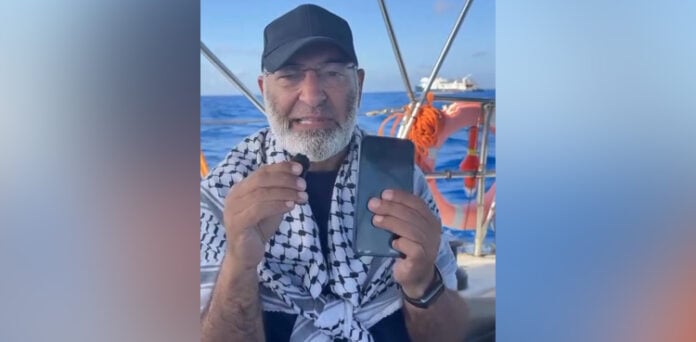
Date: 30 September 2025
Location: At sea, en route to Gaza (reported) — message shared on Facebook
Former Senator and Jamaat-e-Islami leader Mushtaq Ahmad Khan, who is reported to be part of the Global Samood Flotilla bound for Gaza, released an urgent video message on Facebook on 30 September 2025. In the clip he said his mobile phone had been disabled — which he described as an Israeli hack — and warned that he had been unable to contact people for the past 24 hours. He appealed to Pakistanis to raise their voices and press authorities to protect the flotilla, saying the mission intends to break Gaza’s blockade and deliver humanitarian aid.
What Mushtaq Ahmad Khan Said
In his Facebook video message (as reported), Mushtaq Ahmad Khan said he had no communication for the previous 24 hours because his mobile phone had been jammed or hacked. He insisted that despite the dangers — including military action or drone strikes — the participants would not be deterred:
He urged Pakistanis to pray for the mission, to make their voices heard in parliaments, assemblies and institutions, and to pressure governments to provide protection for the flotilla.
According to the message, Khan described horrific scenes in Gaza — claiming that bodies of the deceased were being eaten by animals — and framed the flotilla’s aim as urgent humanitarian relief: to break the blockade and deliver food, medicine and other essential supplies to Palestinians in Gaza.
He warned that in the coming hours they would attempt to enter Gaza waters and said the group was willing to risk arrest or death for the cause. He requested prayers and public pressure on authorities to secure protection for the convoy.
About the Global Samood Flotilla
The Global Samood Flotilla is described as a convoy of small vessels carrying humanitarian workers, activists, politicians and volunteers from multiple countries. Reports indicate the flotilla includes participants from dozens of countries and aims to challenge the blockade on Gaza by delivering emergency supplies by sea.
(The above description is based on the material provided in the video message and accompanying notes from participants.)
Participants and Purpose
-
The convoy reportedly includes people from many countries representing human rights groups, politicians and civil society activists.
-
The stated objective is humanitarian: to reach Gaza, provide food, medicine and other essentials, and break the maritime blockade that prevents such aid from entering easily.
Safety, Legal and Political Issues
Such flotillas are politically sensitive and have previously involved international legal, diplomatic and security complications. Governments, maritime authorities and international organizations typically caution that maritime operations near conflict zones carry serious risks — including interception, detention, or violent confrontation. Organizers and participants often face logistical, legal and safety challenges while attempting such missions.
Man City beat Burnley 5–1 in Premier League match
Reactions and What to Watch
-
The video message calls on Pakistani citizens, political representatives and institutions to pressure the government for protection of the flotilla.
-
Observers should watch for any official statements from the Pakistani government, maritime authorities, or international agencies regarding the flotilla’s progress and any diplomatic or security responses.
-
Independent confirmation of reported claims (for example, alleged phone-jamming or incidents at sea) would normally come from multiple sources — official statements, maritime tracking, or news agencies.
The message from Mushtaq Ahmad Khan highlights the human and political tensions that accompany civilian attempts to deliver aid into conflict zones. The Global Samood Flotilla frames its mission as a humanitarian effort to alleviate suffering in Gaza, while the risks and legal complexities of such an undertaking remain high. Citizens and policymakers continue to face difficult decisions about how best to deliver aid while protecting lives and observing international law.
Frequently Asked Questions (FAQs)
1. Who is Mushtaq Ahmad Khan?
Mushtaq Ahmad Khan is a former senator of Pakistan and a leader associated with Jamaat-e-Islami (as reported). In this instance he is reported to be a participant in the Global Samood Flotilla.
2. What is the Global Samood Flotilla?
It is a convoy of small vessels carrying activists, humanitarian workers and volunteers from multiple countries aiming to reach Gaza and deliver food, medicine and other essential supplies by sea.
3. What did Mushtaq Ahmad Khan claim in his video message?
He said his mobile phone had been jammed or hacked (which prevented communication), described dire conditions in Gaza, and urged people to pressure authorities to protect the flotilla and pray for its success.
4. Is there independent confirmation of the phone-jamming claim?
In the message provided, the claim is reported as Khan’s statement. Independent verification would require statements from telecommunications or security authorities or corroboration from other participants or observers.
5. Why are flotillas controversial?
Flotillas that seek to breach blockades operate in legally and politically sensitive waters. They can provoke diplomatic standoffs, maritime interceptions, and potential use of force by authorities enforcing a blockade.
6. What risks do participants face?
Risks include interception, arrest, seizure of vessels, injury or death in clashes, and legal consequences depending on local and international maritime law and the policies of states involved.
7. How can civilians assist Gaza without entering dangerous waters?
Many aid organizations recommend donating to established humanitarian agencies working through safe, legal channels; supporting diplomatic efforts; and advocating for humanitarian corridors and aid access through international bodies.
8. Will Pakistan’s government protect the flotilla?
Whether any government provides protection depends on diplomatic decisions, international law, capabilities, and political considerations. Official statements from national authorities clarify their stance.
9. How can the public respond to such appeals?
The public can raise awareness, contact elected representatives, donate to credible humanitarian organizations, and follow official guidance on safety and legal matters.
10. Where can I find reliable updates about the flotilla?
Reliable updates typically come from major news outlets, official statements from governments or international organizations, and verified communications from humanitarian agencies — always cross-check multiple reputable sources.